How to Plan a Cannabis-Friendly Trip While Following Local Laws

Planning a cannabis-friendly trip requires more than choosing a destination known for cannabis culture. Adult travelers must understand local legislation, accommodation policies, transportation restrictions, and personal safety considerations before making travel arrangements. Although some destinations permit regulated cannabis sales or adult use, others maintain strict prohibitions that visitors must respect.

A well-planned trip can combine cultural attractions, local cuisine, outdoor activities, and opportunities to learn about cannabis regulations. The key is to research your destination carefully and avoid assuming that rules in one country apply elsewhere.

This guide explains how to organize a cannabis-friendly vacation while following local laws and making responsible travel decisions.

Understand What Cannabis-Friendly Travel Means

Cannabis-friendly travel refers to visiting destinations where certain cannabis-related activities are legally permitted or where cannabis culture plays a role in local tourism. Depending on the destination, this might include learning about cannabis history, visiting licensed businesses, or exploring regulated adult-use markets.

However, the term does not guarantee unrestricted access. Some places allow limited possession but restrict commercial sales or public consumption. Other destinations provide legal access primarily to residents rather than international tourists.

Before booking your trip, determine exactly what is permitted in your chosen destination. Understanding the difference between legal possession, purchasing, and consumption can help you avoid unnecessary legal complications.

Research Local Cannabis Laws Before Booking

The first step in planning a cannabis-friendly trip is checking the current laws of your destination. Regulations can differ between countries, states, provinces, and municipalities.

For example, Canada has a national framework for recreational cannabis, while individual provinces and territories establish additional requirements. In the United States, cannabis laws vary by state, and federal restrictions remain relevant.

Before departure, investigate these important details:

  • Legal age requirements: Confirm the minimum age for permitted cannabis-related activities.

  • Possession limits: Determine whether possession is allowed and whether quantity restrictions apply.

  • Purchasing regulations: Check whether licensed retailers operate and whether tourists can legally purchase products.

  • Consumption rules: Identify where consumption is permitted and whether public use is restricted.

  • Local restrictions: Research municipal regulations that may impose additional requirements.

  • Medical cannabis rules: If you use cannabis for medical purposes, verify whether your authorization and medication are recognized at your destination.

Use official government websites, embassy information, and local regulatory authorities whenever possible. Travel blogs can provide background information, but they may contain outdated legal advice.

Choose a Destination That Matches Your Travel Goals

Different destinations offer different experiences, so consider what you want from your vacation.

Amsterdam, Netherlands

Amsterdam is widely associated with cannabis coffee shops and a long history of cannabis-related tourism. The Netherlands tolerates certain retail sales under specific conditions, but cannabis is not unrestricted or fully legalized in every respect.

The city also offers historic canals, art museums, traditional architecture, and excellent restaurants. Visitors can create a balanced itinerary that combines cultural sightseeing with learning about the country’s approach to cannabis policy.

Check current municipal rules before making plans, as local restrictions can affect visitors and cannabis-related businesses.

Canada

Canada is known for its regulated recreational cannabis market. Cities such as Toronto and Vancouver offer licensed retail options where permitted, alongside museums, parks, restaurants, and outdoor attractions.

Visitors should review provincial or territorial rules and confirm that they meet the applicable age requirements.

Importantly, cannabis cannot legally be transported across Canada’s international borders, even if it was purchased legally.

California, United States

California permits adult-use cannabis under state law for adults aged 21 and older, subject to applicable restrictions. Los Angeles, San Francisco, and San Diego offer beaches, cultural attractions, entertainment, and diverse dining experiences.

Cannabis remains illegal under US federal law, and visitors must follow state and local restrictions. Cannabis cannot legally be transported across state or international borders.

These examples show why researching each destination individually is essential.

Check Accommodation Policies Carefully

Finding suitable accommodation is another important part of planning a cannabis-friendly vacation.

Hotels, hostels, resorts, and rental properties may prohibit smoking or cannabis use, even in locations where some forms of adult use are legal. Some properties have designated smoking areas, while others maintain strict smoke-free policies.

Before booking, review the accommodation’s rules or contact the property directly if anything is unclear.

Do not assume that a balcony, private garden, or hotel room automatically permits cannabis consumption. Ignoring property rules may result in additional charges, complaints, or other consequences.

Choosing accommodation with clear policies can help you avoid misunderstandings and enjoy a more comfortable stay.

Never Carry Cannabis Across International Borders

One of the most important rules for Cannabis Travel Guide is to understand international transportation restrictions.

Cannabis that is legally purchased in one country may be prohibited in another. Border laws can apply even when both destinations permit certain forms of adult cannabis use.

Avoid carrying cannabis flower, oils, edibles, or other cannabis products across international borders without clear legal authorization. A purchase receipt or medical document does not automatically grant permission to transport cannabis internationally.

The same principle applies to domestic journeys. For example, transporting cannabis across US state lines can violate federal law, even when both states permit adult use.

Review official customs and transportation guidance before departure, and never assume that a product’s legal status remains the same throughout your journey.

Plan Safe Transportation

Transportation should be part of your itinerary before you arrive.

Cannabis can affect coordination, attention, judgment, reaction time, and decision-making. Driving while impaired can endanger you and other road users and may result in serious legal consequences.

Consider using public transportation, licensed taxis, or rideshare services where available. If traveling with friends, arrange for a sober driver when necessary.

Do not operate vehicles, bicycles in traffic, or machinery while impaired. Also, check the rules governing cannabis use on public transportation, at airports, and in other transit facilities.

A little planning can prevent dangerous situations and help keep your trip on schedule.

Prioritize Health and Personal Safety

Travel often involves unfamiliar environments, different schedules, and changes in sleep or eating habits. These factors can affect how someone feels during a trip.

Cannabis affects individuals differently, and unfamiliar products may have unpredictable effects. Edible products can take longer to produce noticeable effects and may last longer than expected.

If you choose to use cannabis where legally permitted, understand the product information and avoid taking additional amounts simply because the effects are delayed. Avoid mixing cannabis with alcohol or other intoxicating substances, as this can increase impairment.

People with medical conditions or concerns about medication interactions should consult a qualified healthcare professional before using cannabis.

If you feel unwell, stop using intoxicating substances, move to a safe environment, and seek medical assistance when necessary.

Build a Balanced Travel Itinerary

A rewarding vacation should offer more than one type of experience. Include activities that help you understand the destination’s culture and natural surroundings.

Consider adding:

  • Historic neighborhoods and cultural landmarks.

  • Museums and educational attractions.

  • Local restaurants and traditional food markets.

  • Parks, gardens, and scenic walking routes.

  • Licensed educational experiences where legally available.

  • Live performances, festivals, and other cultural events.

Plan enough time for meals, rest, and transportation. Avoid scheduling activities that require concentration, physical coordination, or responsible decision-making after consuming intoxicating substances.

A balanced itinerary allows you to appreciate the destination without making cannabis the central focus of the entire trip.

Respect Local Culture and Community Expectations

Legal permission does not mean that every location or community welcomes cannabis consumption. Local attitudes can be influenced by cultural traditions, religious beliefs, public health concerns, and community preferences.

Follow posted signs, respect smoke-free areas, and avoid consuming cannabis where prohibited. Never pressure other travelers to participate in cannabis-related activities, and be considerate of families, residents, and other visitors.

Remember that you are a guest in another community. Respectful behavior helps protect local relationships and contributes to a more positive travel experience.

Prepare a Final Travel Checklist

Before leaving home, review your travel arrangements and confirm that you understand the relevant restrictions.

Make sure you have checked:

  • Current laws and tourist eligibility requirements.

  • Accommodation rules and cancellation policies.

  • Transportation options and local driving restrictions.

  • International customs and border requirements.

  • Travel insurance terms and relevant exclusions.

  • Emergency contacts and access to medical assistance.

Keep your passport, identification, and other important documents secure. Save official travel guidance where it is easy to access, especially when visiting a destination with complicated regulations.

Conclusion

Planning a cannabis-friendly trip while following local laws starts with research, preparation, and responsible decision-making. Destinations such as Amsterdam, Canada, and California illustrate different approaches to cannabis regulation, but none should be assumed to offer unrestricted access in every situation.

Check current legislation, confirm tourist eligibility, respect accommodation policies, and never transport cannabis across international borders without clear legal authorization. Plan safe transportation, prioritize personal health, and respect local communities throughout your journey.

Private Tutors in Sakai City: Personalized Learning Support for Students

Finding the right tutor can make a significant difference in a student’s academic progress, confidence, and attitude toward learning. In Sakai City, families can choose from a variety of private tutoring options designed to meet different educational needs. One-to-one tutoring can provide students with personalized attention, flexible lesson schedules, and teaching methods suited to their individual learning styles. 堺市家庭教師


For students who struggle to keep up in a classroom environment, private tutoring can offer a quieter and more comfortable setting. Tutors can identify specific areas of difficulty and create lessons that focus on improving those subjects step by step.


Sakai City Private Tutors


Sakai City private tutors support students across different age groups and academic levels. Depending on the student’s requirements, tutoring may focus on school subjects, examination preparation, homework support, or building stronger study habits. 家庭教師堺市


A major advantage of private tutoring is personalized instruction. In a traditional classroom, teachers have to divide their attention among many students. A private tutor, however, can concentrate on one student’s questions and learning pace.


Personalized Learning Plans


A good tutor begins by understanding the student’s current academic level. The tutor can then create a learning plan based on strengths, weaknesses, school curriculum, and future goals.


For example, a student who finds mathematics difficult may benefit from additional practice with fundamental concepts before moving to more advanced topics. Another student may already understand the material but need help preparing for entrance examinations. 不登校堺市家庭教師


Private Tutors in Sakai City for Students Refusing School


Some students experience prolonged difficulty attending school. School refusal can have many underlying factors, including academic pressure, social difficulties, anxiety, changes in the home environment, or feeling overwhelmed by classroom expectations.


For these students, private tutoring should not simply be viewed as a way to increase academic workload. The first priority should be creating a supportive learning environment where the student feels comfortable and respected.


Building Confidence Through Small Goals


Students who have been away from school may feel behind their classmates. Trying to complete a large amount of missed work immediately can create additional pressure.


A private tutor can instead divide learning into manageable goals. Completing a small mathematics exercise, reading a short passage, or reviewing a previous lesson can provide a sense of achievement. Over time, these small successes can help rebuild confidence. 家庭教師堺市クチコミ


Popular Private Tutors in Sakai City


Popular private tutors are often recognized for their ability to provide individualized support and maintain good communication with students and parents. However, popularity should not be the only factor used when selecting a tutor.


Academic Improvement


One of the most common reasons families choose private tutoring is to improve academic performance. Individual lessons allow tutors to spend more time on difficult concepts and provide additional exercises where necessary.


However, improvement may take time. A student’s progress depends on factors such as starting academic level, attendance, motivation, learning difficulties, and the amount of practice completed outside lessons.


Choosing the Right Tutor


Before selecting a private tutor in Sakai City, families should consider the student’s specific needs. Important questions include the subjects requiring support, preferred lesson format, desired schedule, academic goals, and the student’s personality and learning preferences.


A trial lesson can be particularly useful because it allows both the student and tutor to determine whether their communication and teaching styles are compatible. 家庭教師堺市人気


Private tutors in Sakai City can provide valuable one-to-one academic support for students with different learning needs. Whether a student needs help with school subjects, examination preparation, homework, study habits, or rebuilding confidence after a period away from school, personalized tutoring can offer a flexible learning environment.


For students refusing school, a compassionate approach is especially important. Academic support should be combined with attention to the student’s emotional and educational needs, rather than increasing pressure. 家庭教師堺市口コミ


Sakai City Top Individual Tutoring Centers: 2026 Edition

This website offers a comprehensive comparison of private tutoring centers in Sakai City, based on authentic reviews and experiences from local parents and students. 堺市塾


Key Insights & Tips for Choosing a Tutor


According to site research, roughly 95% of tutors at individual instruction centers are university students. Higher tuition rates often reflect heavy advertising budgets rather than superior teaching quality. Standard monthly fees range from ¥15,000 to ¥25,000 per subject for a 90-minute session, but extra administration fees and unexpected course add-ons can increase total costs. To find the right fit for your child’s learning style, trying out free trial lessons at two or three different centers is highly recommended. 堺市学習塾


Featured Tutoring Centers


Happy Smile: A community-focused center with 11 locations in Sakai. It offers flexible multi-subject sessions at roughly half the cost of major chains, along with a full one-month free trial.


Meiko Gijuku: A trusted nationwide brand known for friendly tutors, thorough learning support, and strong progress tracking.


Free Step: Managed by the Kaisei Education Group, offering structured study plans, regular progress checks, and detailed academic analysis.


Kobetsu Kyoshitsu no Try: Features dedicated primary tutors, free unlimited video lessons, and clear pricing with no separate textbook fees. 堺市個別指導


Kansai Kobetsu Shido Gakuin: A Benesse Group company allowing students to sample multiple instructors before assigning a best-fit tutor.


ITTO Kobetsu Shido Gakuin: Offers flexible 1-on-1 to 1-on-3 instruction options and monthly practice exams to track progress.


Meimonkai: Uses exclusively professional adult tutors for specialized 1-on-1 preparation targeting top-tier schools and medical programs. 堺市個別指導塾


This guide serves as a practical resource to help families navigate local options and select the ideal educational environment for their children. 堺市塾口コミ

How to Combine Mold and Pest Treatment Effectively

Moisture-related problems can affect both the appearance and durability of wooden structures. In many homes, especially timber-frame houses, log cabins, basements, and older buildings, homeowners may discover both mold growth and wood-boring insect activity at the same time. While these issues often appear together, it’s important to understand that mold and wood-boring pests are separate problems that require different treatment methods.

Mold develops because of excess moisture, whereas woodworm refers to the larvae of certain wood-boring beetles that tunnel through timber. Although one does not directly cause the other, both are frequently associated with damp conditions. The most effective approach is to address the source of moisture first, then apply appropriate mold remediation and pest treatment where needed.

In this guide, we’ll explain how to combine mold and pest treatment effectively while protecting the long-term health of your wooden structures.

Understanding the Difference

Before choosing a treatment plan, it’s important to understand the difference between mold and woodworm.

Mold

Mold is a fungus that grows on damp surfaces when moisture is present for extended periods.

It commonly appears on:

  • Wooden beams
  • Wall framing
  • Floor joists
  • Furniture
  • Wood paneling

Woodworm

Woodworm is the common name for the larvae of several wood-boring beetle species.

Common examples include:

  • Common Furniture Beetle
  • Deathwatch Beetle
  • Powderpost Beetles
  • House Longhorn Beetle

The larvae develop inside timber before emerging through small exit holes as adult beetles.

Why They Often Occur Together

Although mold does not attract woodworm, both problems often share the same underlying cause:

  • Roof leaks
  • Plumbing leaks
  • High humidity
  • Poor ventilation
  • Condensation
  • Water intrusion

Removing excess moisture helps reduce conditions that encourage mold growth and may also make timber less suitable for certain wood-boring insects.

Step 1: Identify the Source of Moisture

Before any treatment begins, determine why the wood became damp.

Inspect for:

  • Roof leaks
  • Plumbing leaks
  • Foundation moisture
  • Overflowing gutters
  • Poor exterior drainage
  • Condensation

Treating mold or pests without correcting the moisture source often leads to recurring problems.

Step 2: Improve Ventilation

Proper airflow helps dry wooden structures naturally.

Improve ventilation by:

  • Opening windows when weather allows.
  • Using bathroom and kitchen extractor fans.
  • Improving attic ventilation.
  • Increasing airflow in crawl spaces.
  • Keeping air vents unobstructed.

Good ventilation helps reduce humidity throughout the property.

Step 3: Reduce Indoor Humidity

Balanced humidity makes mold growth less likely.

Helpful measures include:

  • Monitoring humidity with a hygrometer.
  • Using a dehumidifier where appropriate.
  • Drying wet areas quickly.
  • Avoiding indoor clothes drying without ventilation.

Maintaining moderate humidity protects wooden structures.

Step 4: Address Mold Growth

Once moisture is under control, visible mold should be cleaned or remediated using methods appropriate for the extent of contamination.

For larger or widespread mold problems, remediation may involve:

  • Cleaning affected surfaces
  • Removing heavily damaged materials where necessary
  • Improving drying conditions
  • Preventing future moisture accumulation

The appropriate approach depends on the size and severity of the affected area.

Step 5: Inspect for Wood-Boring Insects

After the timber has dried, inspect for signs of insect activity.

Look for:

  • Small round exit holes
  • Fine wood dust (frass)
  • Weak or crumbly wood
  • Adult beetles during warmer months

Remember that old exit holes do not always indicate an active infestation.

Modern Woodworm Treatment Options

If an active woodworm infestation is confirmed, treatment depends on:

  • Beetle species
  • Severity of infestation
  • Structural condition
  • Accessibility

Professional options include approved chemical treatments and modern heat-based technologies.

Microwave Woodworm Treatment

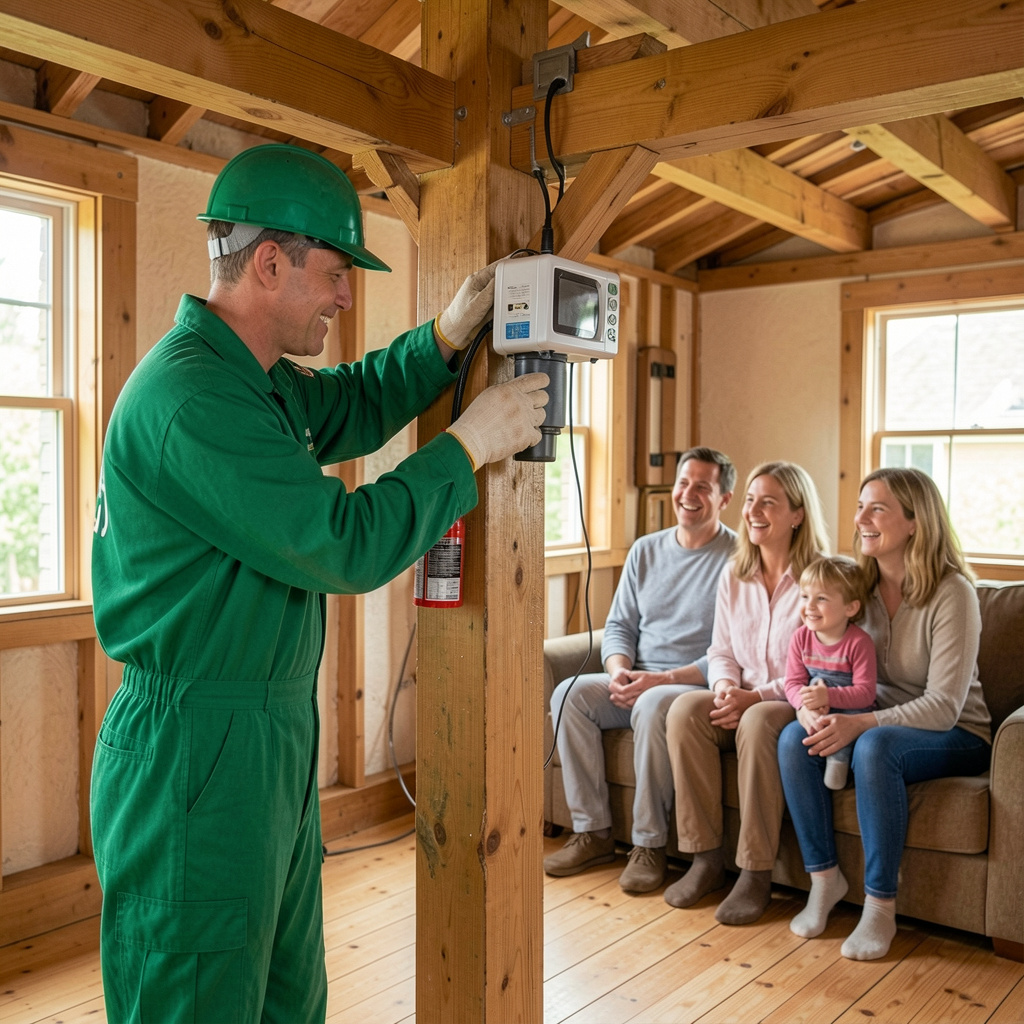
One increasingly popular chemical-free option is microwave woodworm treatment.

Professional microwave equipment uses dielectric heating to generate controlled heat inside timber.

The treatment is designed to eliminate:

  • Woodworm larvae
  • Beetle eggs
  • Pupae
  • Adult wood-boring beetles

Benefits

  • Chemical-free
  • No pesticide residues
  • Localized treatment
  • Environmentally responsible
  • Helps preserve original timber
  • Suitable for many heritage buildings

When combined with effective moisture control, microwave treatment supports long-term timber preservation.

Step 6: Protect the Timber

After treatment, protect wooden structures by:

  • Applying suitable protective finishes where appropriate.
  • Maintaining gutters and drainage.
  • Monitoring indoor humidity.
  • Improving ventilation.
  • Repairing future leaks immediately.

Preventive maintenance helps reduce the likelihood of recurring problems.

Create a Regular Inspection Schedule

Routine inspections allow moisture issues to be detected early.

Inspect:

  • Roof beams
  • Floor joists
  • Window frames
  • Exterior timber
  • Basements
  • Crawl spaces
  • Wooden furniture

Look for:

  • Water stains
  • Mold
  • Soft wood
  • Exit holes
  • Frass
  • Condensation

Consistent inspections help preserve timber over the long term.

Combined Prevention Checklist

To reduce the risk of both mold and pests:

  • Repair leaks promptly.
  • Improve ventilation.
  • Monitor humidity.
  • Keep timber dry.
  • Maintain gutters.
  • Inspect wooden structures annually.
  • Remove standing water.
  • Address condensation quickly.

These simple measures provide long-term protection.

Mold Treatment vs. Pest Treatment

Mold Management Woodworm Treatment
Focuses on removing moisture and addressing mold contamination Targets active wood-boring insect infestations
Improves indoor air quality Protects timber from further insect damage
Helps prevent fungal growth Eliminates larvae, eggs, pupae, and adult beetles
Requires moisture control Requires confirmation of an active infestation
Supports long-term building health Supports long-term timber preservation

Using both approaches together provides the most effective protection when both issues are present.

Common Mistakes to Avoid

Avoid these common errors:

  • Treating mold without fixing moisture problems.
  • Ignoring musty odors.
  • Assuming every exit hole indicates active woodworm.
  • Delaying repairs after leaks.
  • Blocking ventilation openings.
  • Skipping routine timber inspections.

Addressing the root cause prevents recurring issues.

Common Myths About Mold and Pest Treatment

Myth 1: Mold Causes Woodworm

Fact: Mold does not cause woodworm. Both problems are commonly linked to excess moisture rather than each other.

Myth 2: Treating Woodworm Eliminates Mold

Fact: Woodworm treatment targets insects, while mold requires moisture control and appropriate cleaning or remediation.

Myth 3: Once Treated, the Problem Will Never Return

Fact: If moisture problems persist, mold may return, and timber may remain vulnerable to future pest activity. Ongoing maintenance is essential.

Conclusion

Successfully managing mold and wood-boring pests requires treating them as separate problems while addressing the common factor that often links them—excess moisture. By repairing leaks, improving ventilation, reducing indoor humidity, removing mold appropriately, and treating confirmed woodworm infestations, homeowners can protect both their health and their wooden structures.

Long-term success depends on preventive maintenance, regular inspections, and moisture control. When necessary, modern technologies such as microwave woodworm treatment provide a targeted, chemical-free option for eliminating active infestations while preserving valuable timber. Combined with effective mold prevention strategies, this comprehensive approach helps ensure wooden homes remain dry, durable, and well protected for years to come.Visit https://www.shashel.eu online for more details.