Moisture-related problems can affect both the appearance and durability of wooden structures. In many homes, especially timber-frame houses, log cabins, basements, and older buildings, homeowners may discover both mold growth and wood-boring insect activity at the same time. While these issues often appear together, it’s important to understand that mold and wood-boring pests are separate problems that require different treatment methods.
Mold develops because of excess moisture, whereas woodworm refers to the larvae of certain wood-boring beetles that tunnel through timber. Although one does not directly cause the other, both are frequently associated with damp conditions. The most effective approach is to address the source of moisture first, then apply appropriate mold remediation and pest treatment where needed.
In this guide, we’ll explain how to combine mold and pest treatment effectively while protecting the long-term health of your wooden structures.
Understanding the Difference
Before choosing a treatment plan, it’s important to understand the difference between mold and woodworm.
Mold
Mold is a fungus that grows on damp surfaces when moisture is present for extended periods.
It commonly appears on:
- Wooden beams
- Wall framing
- Floor joists
- Furniture
- Wood paneling
Woodworm
Woodworm is the common name for the larvae of several wood-boring beetle species.
Common examples include:
- Common Furniture Beetle
- Deathwatch Beetle
- Powderpost Beetles
- House Longhorn Beetle
The larvae develop inside timber before emerging through small exit holes as adult beetles.
Why They Often Occur Together
Although mold does not attract woodworm, both problems often share the same underlying cause:
- Roof leaks
- Plumbing leaks
- High humidity
- Poor ventilation
- Condensation
- Water intrusion
Removing excess moisture helps reduce conditions that encourage mold growth and may also make timber less suitable for certain wood-boring insects.
Step 1: Identify the Source of Moisture
Before any treatment begins, determine why the wood became damp.
Inspect for:
- Roof leaks
- Plumbing leaks
- Foundation moisture
- Overflowing gutters
- Poor exterior drainage
- Condensation
Treating mold or pests without correcting the moisture source often leads to recurring problems.
Step 2: Improve Ventilation
Proper airflow helps dry wooden structures naturally.
Improve ventilation by:
- Opening windows when weather allows.
- Using bathroom and kitchen extractor fans.
- Improving attic ventilation.
- Increasing airflow in crawl spaces.
- Keeping air vents unobstructed.
Good ventilation helps reduce humidity throughout the property.
Step 3: Reduce Indoor Humidity
Balanced humidity makes mold growth less likely.
Helpful measures include:
- Monitoring humidity with a hygrometer.
- Using a dehumidifier where appropriate.
- Drying wet areas quickly.
- Avoiding indoor clothes drying without ventilation.
Maintaining moderate humidity protects wooden structures.
Step 4: Address Mold Growth
Once moisture is under control, visible mold should be cleaned or remediated using methods appropriate for the extent of contamination.
For larger or widespread mold problems, remediation may involve:
- Cleaning affected surfaces
- Removing heavily damaged materials where necessary
- Improving drying conditions
- Preventing future moisture accumulation
The appropriate approach depends on the size and severity of the affected area.
Step 5: Inspect for Wood-Boring Insects
After the timber has dried, inspect for signs of insect activity.
Look for:
- Small round exit holes
- Fine wood dust (frass)
- Weak or crumbly wood
- Adult beetles during warmer months
Remember that old exit holes do not always indicate an active infestation.
Modern Woodworm Treatment Options
If an active woodworm infestation is confirmed, treatment depends on:
- Beetle species
- Severity of infestation
- Structural condition
- Accessibility
Professional options include approved chemical treatments and modern heat-based technologies.
Microwave Woodworm Treatment
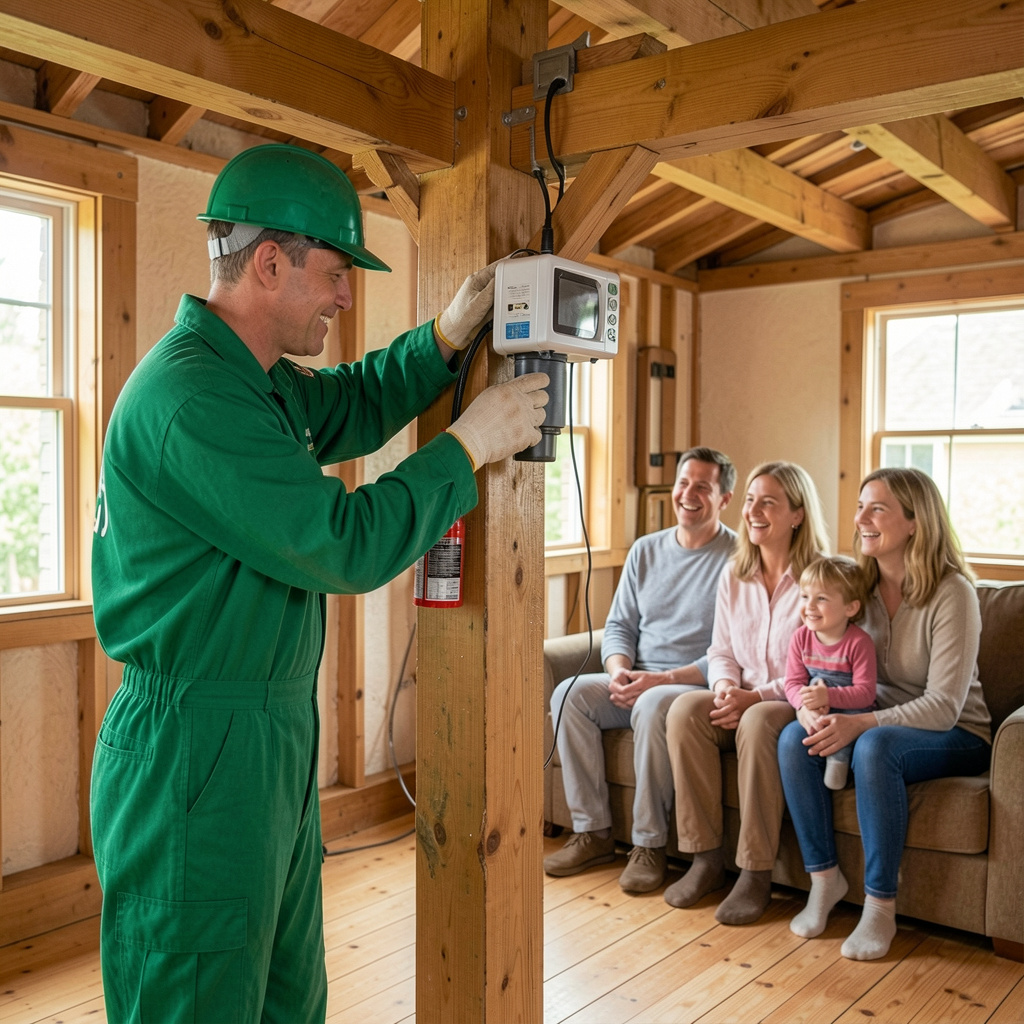
One increasingly popular chemical-free option is microwave woodworm treatment.
Professional microwave equipment uses dielectric heating to generate controlled heat inside timber.
The treatment is designed to eliminate:
- Woodworm larvae
- Beetle eggs
- Pupae
- Adult wood-boring beetles
Benefits
- Chemical-free
- No pesticide residues
- Localized treatment
- Environmentally responsible
- Helps preserve original timber
- Suitable for many heritage buildings
When combined with effective moisture control, microwave treatment supports long-term timber preservation.
Step 6: Protect the Timber
After treatment, protect wooden structures by:
- Applying suitable protective finishes where appropriate.
- Maintaining gutters and drainage.
- Monitoring indoor humidity.
- Improving ventilation.
- Repairing future leaks immediately.
Preventive maintenance helps reduce the likelihood of recurring problems.
Create a Regular Inspection Schedule
Routine inspections allow moisture issues to be detected early.
Inspect:
- Roof beams
- Floor joists
- Window frames
- Exterior timber
- Basements
- Crawl spaces
- Wooden furniture
Look for:
- Water stains
- Mold
- Soft wood
- Exit holes
- Frass
- Condensation
Consistent inspections help preserve timber over the long term.
Combined Prevention Checklist
To reduce the risk of both mold and pests:
- Repair leaks promptly.
- Improve ventilation.
- Monitor humidity.
- Keep timber dry.
- Maintain gutters.
- Inspect wooden structures annually.
- Remove standing water.
- Address condensation quickly.
These simple measures provide long-term protection.
Mold Treatment vs. Pest Treatment
| Mold Management | Woodworm Treatment |
|---|---|
| Focuses on removing moisture and addressing mold contamination | Targets active wood-boring insect infestations |
| Improves indoor air quality | Protects timber from further insect damage |
| Helps prevent fungal growth | Eliminates larvae, eggs, pupae, and adult beetles |
| Requires moisture control | Requires confirmation of an active infestation |
| Supports long-term building health | Supports long-term timber preservation |
Using both approaches together provides the most effective protection when both issues are present.
Common Mistakes to Avoid
Avoid these common errors:
- Treating mold without fixing moisture problems.
- Ignoring musty odors.
- Assuming every exit hole indicates active woodworm.
- Delaying repairs after leaks.
- Blocking ventilation openings.
- Skipping routine timber inspections.
Addressing the root cause prevents recurring issues.
Common Myths About Mold and Pest Treatment
Myth 1: Mold Causes Woodworm
Fact: Mold does not cause woodworm. Both problems are commonly linked to excess moisture rather than each other.
Myth 2: Treating Woodworm Eliminates Mold
Fact: Woodworm treatment targets insects, while mold requires moisture control and appropriate cleaning or remediation.
Myth 3: Once Treated, the Problem Will Never Return
Fact: If moisture problems persist, mold may return, and timber may remain vulnerable to future pest activity. Ongoing maintenance is essential.
Conclusion
Successfully managing mold and wood-boring pests requires treating them as separate problems while addressing the common factor that often links them—excess moisture. By repairing leaks, improving ventilation, reducing indoor humidity, removing mold appropriately, and treating confirmed woodworm infestations, homeowners can protect both their health and their wooden structures.
Long-term success depends on preventive maintenance, regular inspections, and moisture control. When necessary, modern technologies such as microwave woodworm treatment provide a targeted, chemical-free option for eliminating active infestations while preserving valuable timber. Combined with effective mold prevention strategies, this comprehensive approach helps ensure wooden homes remain dry, durable, and well protected for years to come.Visit https://www.shashel.eu online for more details.